Shop for CCTV cameras or alarm systems in Dubai for more than five minutes and you’ll run into the phrase “SIRA approved.” It sounds like a technicality, but it isn’t. It’s a legal line in the sand, and which side of it your security system falls on can cost you a lot more than the price of the equipment itself.
Here’s what SIRA approval actually means, why it matters more than most business owners realize, and how to tell a compliant system from one that just looks the part.
So What Is SIRA, Exactly?
SIRA, the Security Industry Regulatory Agency, is the Dubai Police-affiliated body that sets the rules for private security in the emirate. That covers everything from how guards are trained to the technical specs a CCTV camera or alarm system has to meet before it can legally be sold and installed.
If you’re running commercial premises in Dubai, this generally isn’t optional. SIRA’s standards get enforced through licensing checks, spot inspections, and periodic audits, not just a box you tick once and forget about.
What “SIRA Approved” Really Means
A SIRA-approved system has been through actual certification, not just a sticker slapped on the box. Both the equipment and the company installing it get vetted against a set of criteria, including:
- Video quality and retention: minimum resolution, frame rate, and how long footage has to be stored (usually 30–90 days, depending on your business type)
- Cybersecurity: safeguards against hacking or unauthorized remote access
- Installer licensing: Only SIRA-certified companies are allowed to install or service the systems
- Police integration: The ability to connect with Dubai Police monitoring networks where required
- Build quality: Tamper resistance and durability, particularly important for banks, jewelry stores, and warehouses
Once a system clears all this, it (and the installer) get added to SIRA’s official registry, the list authorities check when they come knocking for an inspection.
And Non-SIRA Systems?
These are the systems that skip that process entirely: generic CCTV, imported DIY alarm kits, anything installed without local sign-off. And here’s the tricky part: they often look completely identical to approved systems. Plenty of them work fine as electronics.
The issue was never functionality. It’s that they don’t meet Dubai’s regulatory bar, and that gap is where the business risk lives.
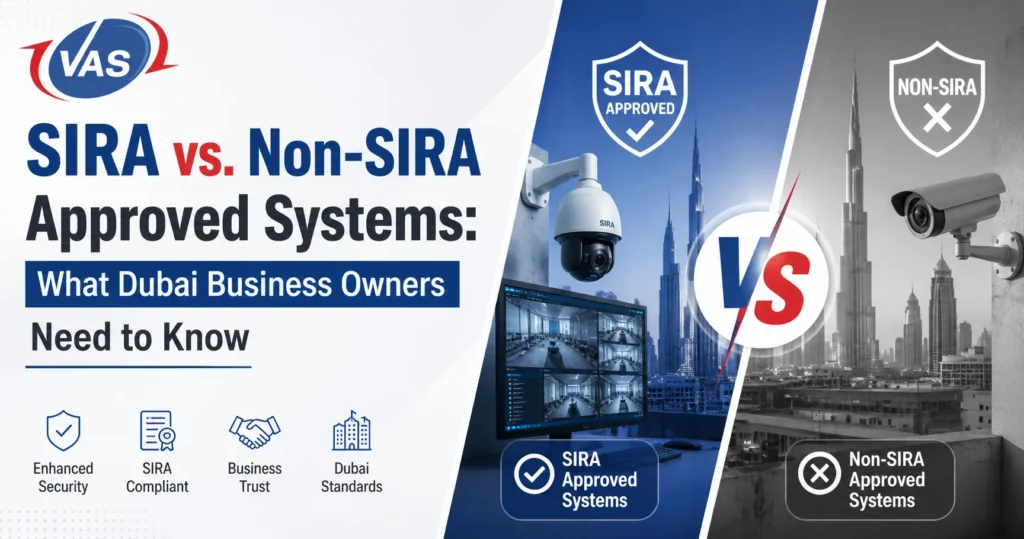
SIRA vs. Non-SIRA, Side by Side
| Factor | SIRA Approved | Non-SIRA |
| Legal compliance | Meets Dubai’s regulatory requirements | Can put your license at risk |
| Installer | Must hold a SIRA license | Often unverified or unlicensed |
| Data retention | Meets mandated storage windows | Can fall short, inconsistently |
| Police integration | Compatible with monitoring networks | Usually not compatible |
| Insurance claims | Holds up as valid evidence | Can be challenged or rejected |
| Inspections | Passes | Risk of fines or forced upgrades |
Why It Actually Matters
Licensing and Renewals
A lot of trade licenses in Dubai retail, hospitality, and anything dealing with cash or valuables require proof of SIRA-compliant security. Skip it, and your renewal can get held up or penalized.
Insurance and liability
If something happens a theft, a fire, a dispute with an employee footage from a non-SIRA system might not carry weight with your insurer or in a legal proceeding. That’s a gap you don’t want to discover after the fact.
Fines and Forced Replacement
Dubai runs periodic compliance checks, and getting caught with unapproved equipment usually means a fine and a mandate to rip it out and start over, which costs more than doing it right the first time.
Peace of Mind
Beyond the legal side, SIRA-approved gear is simply held to a higher, independently verified bar. That’s worth something on its own.
Where VAS Technologies Fit In
This is where Value Added Services (VAS) technologies earn their keep. A good company doesn’t just sell you a camera; they act as a compliance partner from start to finish, which matters a lot in a regulatory environment like Dubai’s.
Some of the advantages provided by VAS technology in supporting business owners:
- Acquisition of certified devices: The vendors supplying devices make sure to use only those devices that have already been approved by SIRA.
- Installation license: Being required by SIRA to have certified installation, working through a VAS vendor ensures compliance not only in terms of the devices but also in terms of installation.
- Integrated system management: All the systems, like CCTV, access control, alarm and fire safety, combined together in one platform to ease the everyday work and audits.
- Continuous monitoring and maintenance: 24/7 monitoring and maintenance to keep the systems compliant with SIRA’s cybersecurity requirements even long after their installation.
- Audit support: When SIRA or Dubai Police show up for an inspection, VAS partners can hand over the paperwork and logs you need on the spot.
- Room to grow: As you open new locations, VAS providers can replicate a compliant setup quickly instead of starting from zero each time.
If you don’t have security expertise in-house and most business owners don’t, VAS technologies act as a kind of safety net, catching the mistakes that would otherwise only surface during an inspection
Getting It Right
If you’re setting up or upgrading security for your business, the path is fairly simple:
- Check whether your business category has mandatory SIRA requirements (most do).
- Work only with SIRA-licensed installers and VAS providers.
- Get proof of SIRA approval for the equipment and the installer before signing anything.
- Keep that documentation on file for renewals and inspections.
Non-SIRA systems might look like the cheaper option on paper, but between fines, forced replacements, and rejected insurance claims, that math rarely holds up in the long run.
Frequently Asked Questions
Must every business obtain approval from SIRA?
Most businesses require SIRA approval, particularly businesses that deal with cash, valuable items, or pedestrian foot traffic. However, SIRA requirements differ according to the type of business.
How can I tell whether my system is SIRA approved?
You can get the approval certificate and SIRA license numbers from your installer.
Can I install a non-SIRA system now and upgrade later?
You can, but it’s a gamble; if an inspection lands during that window, you’re looking at fines and an immediate forced upgrade anyway.
Do these rules apply to home security too?
Not really; SIRA is focused on commercial and business security. Residential systems have more flexibility, though some communities have their own building-level requirements.
What happens if my business fails a SIRA inspection?
Typically a notice to upgrade within a set timeframe, plus a fine. Repeated failures can also affect license renewal.
Are SIRA-approved systems more expensive?
Usually a bit, yes; certified hardware and licensed installation cost more upfront. But it’s cheaper than the fines and rip-and-replace scenario down the road.
What exactly does a VAS provider do for compliance?
They bundle certified products, licensed installation, monitoring, and audit documentation, so you’re not managing every compliance detail solo.
Can I upgrade an existing non-SIRA system instead of replacing it entirely?
Sometimes it depends on compatibility. A SIRA-licensed provider can assess what’s salvageable and what isn’t.
How long does certification of a new installation usually take?
It varies by business type and provider, but an experienced SIRA-licensed installer will generally move things along faster.
Does SIRA approval cover cybersecurity, or just the physical hardware?
Both modern SIRA standards include cybersecurity requirements, especially for systems with remote access or cloud storage.

Related Post
- Biometric & Access Control System Installation: What Dubai Businesses Actually Need to Know
- How to Pass a SIRA CCTV Inspection in Dubai: Checklist & Common Failures
- Essential Cybersecurity Guidelines for UAE Companies Handling Sensitive Data

- Designing a Frictionless Hybrid Meeting Room: Best AV Solutions for Teams & Zoom

- Access Control & Biometric Compliance in Dubai Workplaces: A Guide for Facility Managers
- SIRA vs. Non-SIRA Approved Systems: What Dubai Business Owners Need to Know