If you run a restaurant, shop, or warehouse in Dubai, you may think CCTV just means buying cameras and fixing them to the wall. In Dubai, it doesn’t work that way. Your system has to be designed, installed, and approved under rules set by SIRA, the Security Industry Regulatory Agency. This guide explains the whole process in simple language.
What Is SIRA CCTV Approval?
SIRA regulates the security industry in Dubai. Many commercial premises, including shops, restaurants, offices, malls and warehouses, must have a CCTV system that meets SIRA’s technical standards, installed and maintained by a SIRA-licensed security company. You cannot self-certify a commercial system, and neither can an ordinary electrician.
In practice, approval means three things:
- Your camera layout is approved on paper before installation.
- Your system is built exactly as approved.
- Your system is connected to SIRA’s monitoring network and passes an inspection.
Why You Should Not Skip It
- Licence Problems: Self-installed or unapproved systems cannot pass the SIRA audit and will not get a No Objection Certificate (NOC). A missing certificate can hold up trade licence renewal.
- Fines: Industry sources report fines between AED 5,000 and AED 50,000 for non-compliance. Check the current amount with SIRA or your installer.
- Real Protection: A design built around entrances, cash counters and stock areas gives you useful footage when something goes wrong.
The 6 Steps to SIRA CCTV Approval
Step 1: Site Survey
A SIRA-approved company visits your premises. They check entrances, exits, cash points, storage areas, blind spots and lighting, then decide how many cameras you need and where.
Step 2: Prepare the Documents
You will usually need a valid trade licence and your site layout. The proposed camera placement plan is part of the submission.
Step 3: Get the Layout Approved (SPC)
Your installer prepares the CCTV layout drawing. SIRA reviews the design and, once it is approved, issues the Security Plan Certification (SPC). Do not start installation before this.
Step 4: Install the system
The system must be installed strictly according to the approved drawings and SIRA technical guidelines. If cameras end up in different places from the drawing, you can fail the inspection.
Step 5: Connect to VideoGuard and submit SVG drawings
VideoGuard is the device that links your CCTV to SIRA’s network. It does not watch your live feed all day. It monitors the health of your system, and if a camera goes offline or recording stops, SIRA gets an automatic alert. To get the connectivity certificate, you connect VideoGuard and submit SVG drawings, and the portal must show your recorder as ONLINE.
Step 6: Audit and NOC
After you pay the fees, you request an inspection. If the site passes the audit, you receive the official NOC.
Key Technical Rules to Know
Sources disagree on some details, so treat these as a checklist to confirm with your installer, not as final numbers.
- Footage storage: a minimum of 31 days, with some sources saying up to 90 days for high-security facilities.
- Camera quality: Some guides say 4K, while others say 1080p Full HD is the minimum. Ask your installer which applies to your premises and licence type.
- Equipment: Only SIRA-approved recorders can connect to VideoGuard.
- Maintenance: Some guidance requires an annual maintenance contract with a SIRA-registered company, with at least four preventive visits a year.
What Is Different for Restaurants, Shops and Warehouses
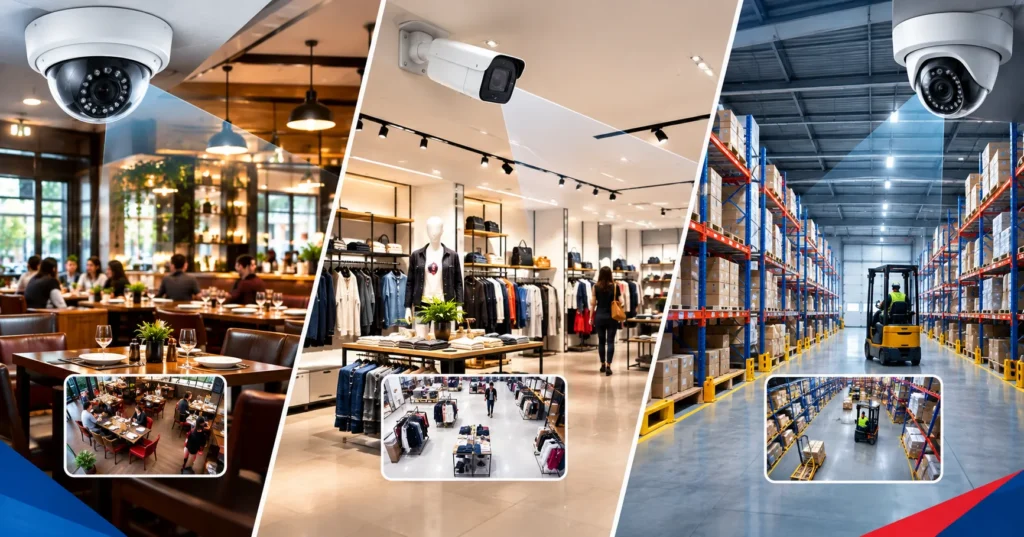
Restaurants
- Cover the entrance, cash counter, kitchen entry and back door.
- Dining areas usually need wide coverage rather than close-ups.
- Kitchen heat and grease can damage equipment, so ask for suitable housings.
Shops and Retail Stores
- Put cameras at the entrance and exit and at the cash counter.
- Cover aisles and high-value displays.
- Glass frontage means strong daylight, so your cameras need to handle bright and dark areas well.
Warehouses
- Cover loading bays, gates, yard areas, and aisles with high-value stock.
- Large spaces need more cameras and more cabling.
- Think about night-time visibility and the distance to the recorder.
How Much Does It Cost?
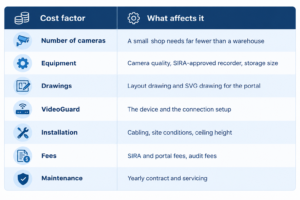
There is no single price for SIRA CCTV approval. I could not find an official fixed fee for the whole process, and published prices vary a lot between companies. The final cost depends on these things:
How Long Does It Take?
The sources give different ranges:
- 1 to 3 weeks from system plan to NOC, according to one source.
- About 2 to 6 weeks for the connection and audit stage, according to another.
Your own timeline depends on three things:
- How big your site is.
- How complete your documents are.
- How soon an inspector is available.
Missing documents and drawing corrections are the most common causes of delay.
Common Mistakes to Avoid
- Installing cameras before the layout is approved.
- Buying equipment that is not SIRA-approved.
- Hiring an installer who is not SIRA-licensed.
- Forgetting the VideoGuard connection.
- Ignoring maintenance until the audit.
- Choosing only on price.
How VAS Helps With SIRA Approval
Approval has many moving parts: drawings, installation, VideoGuard and inspection. VAS is a SIRA-approved company in Dubai that covers these parts in one place.
- SVG drawings and layouts: VAS prepares the SVG drawings and building layouts that SIRA requires.
- CCTV design: The team plans the system layout so it meets SIRA standards.
- Installation: VAS Technologie installs CCTV systems using current technology.
- VideoGuard: VAS Technologie provides Video Guard installation services.
- One team: Design, drawings and installation stay with one company, which means fewer handovers and fewer chances for mistakes.
For a restaurant, shop or warehouse owner, this means you do not have to chase several vendors. You can contact VAS to discuss your premises.
Frequently Asked Questions
Is SIRA approval mandatory for my restaurant, shop or warehouse?
Most commercial premises open to the public or holding stock need a SIRA-compliant system. Private villas and apartments are generally exempt. Confirm your case with a SIRA-approved company.
Can I install CCTV myself or hire any technician?
No. A SIRA-compliant system must be designed, installed, and certified by a SIRA-licensed company.
What is SPC?
The Security Plan Certification. It is the pre-approval SIRA issues before CCTV installation begins.
What is an NOC?
The No Objection Certificate. It is the final approval issued after your system passes inspection.
What is VideoGuard?
A device that connects your CCTV to SIRA’s network and reports if the system goes offline.
What are SVG drawings and why do I need them?
They are vector-format site drawings showing where your cameras and recorders are. They are uploaded to the VideoGuard portal so SIRA’s control room can see your system layout.
How long must footage be stored?
At least 31 days, with longer periods for some facility types. Confirm the figure for your premises.
What happens if my system fails the audit?
You fix the issues, such as camera positions or connection problems, and request a re-inspection. Building exactly to the approved drawing reduces this risk.
Do I need maintenance after approval?
Yes. A working system matters as much as an approved one, and SIRA conducts periodic audits to confirm systems stay functional.
Can I upgrade an old CCTV system instead of replacing it?
Sometimes, if the recorder is SIRA-approved and cameras meet current standards. A site survey will tell you.
Final Thoughts
SIRA approval looks complicated, but it follows a clear order: survey, drawing approval, installation, VideoGuard connection and audit. Work with a SIRA-approved company from day one, get an itemised quote, and make sure the layout is approved before any cameras go up.

Related Post
- SIRA CCTV Approval in Dubai: Cost, Steps and Timeline for Restaurants, Shops and Warehouses

- Biometric & Access Control System Installation: What Dubai Businesses Actually Need to Know
- How to Pass a SIRA CCTV Inspection in Dubai: Checklist & Common Failures
- Essential Cybersecurity Guidelines for UAE Companies Handling Sensitive Data
- Designing a Frictionless Hybrid Meeting Room: Best AV Solutions for Teams & Zoom
- Access Control & Biometric Compliance in Dubai Workplaces: A Guide for Facility Managers